You must log in or # to comment.
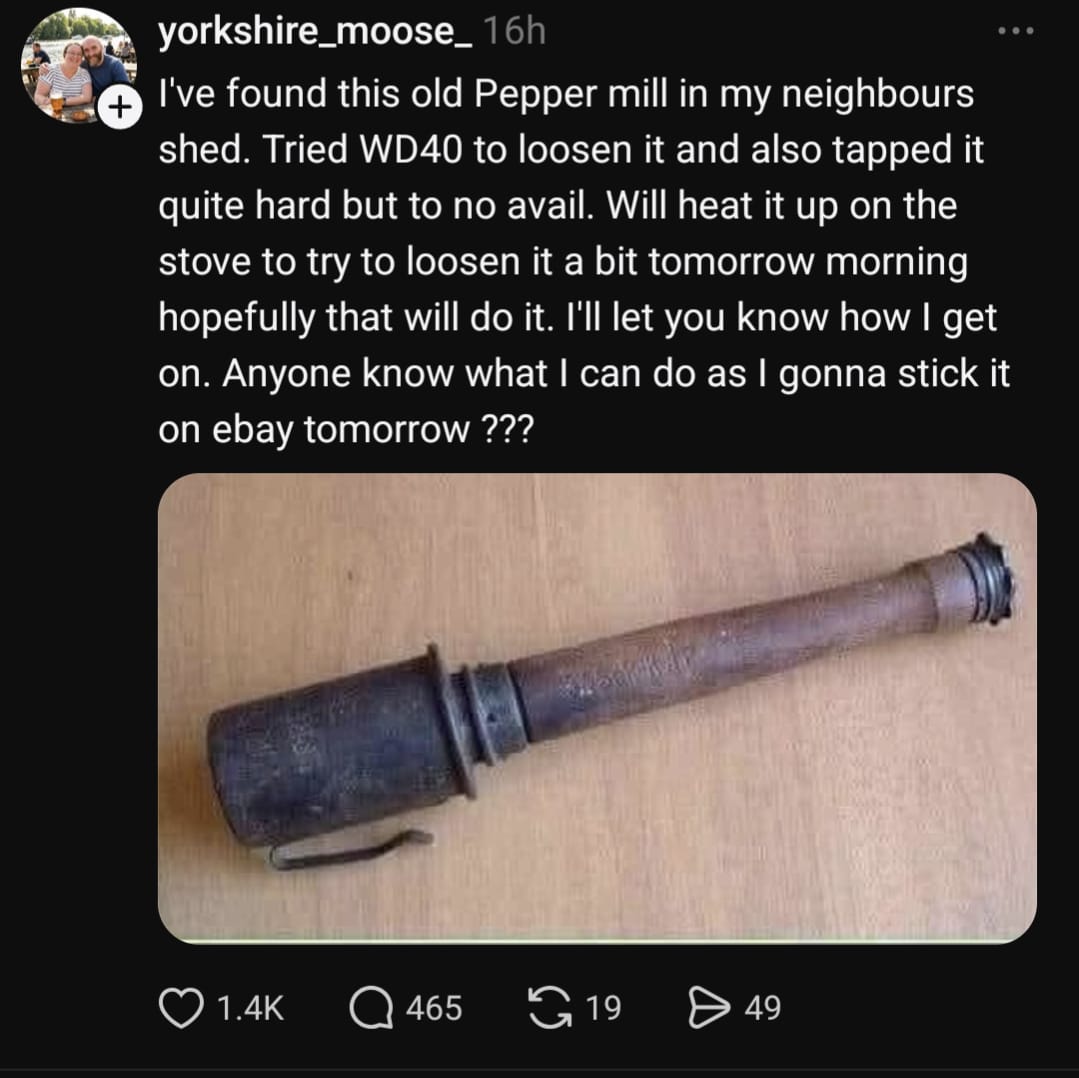
This is an iconic German Stielhandgranate (specifically resembling the Model 1916 or Model 1924), a type of military hand grenade used extensively during World War I and World War II. It is famously nicknamed the “potato masher” due to its distinctive shape.
Had to look it up since I’m not well versed in WWI / WWII German equipment.
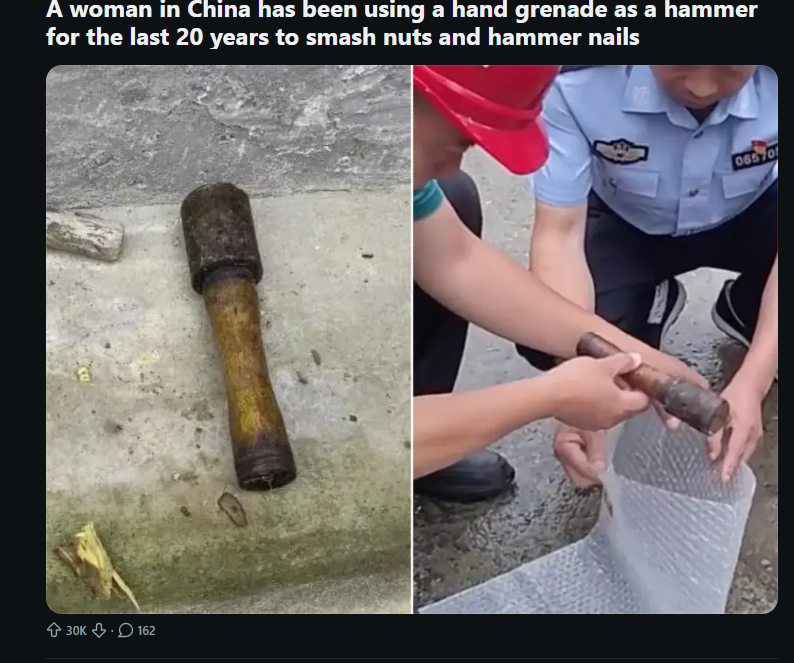
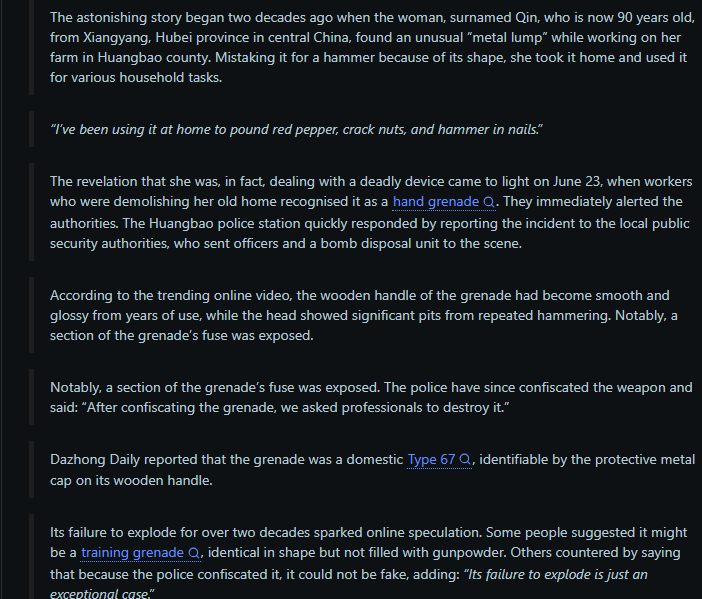
“domestic” grenade, see the granny knew it was for household tasks 😆
Its those foreign, import grenades that cause problems.
I hope someone got this lady the tools she needs. Unsure by image of this was posthumous.
Silly moose that’s not a Pepper mill, it’s a potato masher! No disassembly needed, just smash potatoes for a delicious mashed side dish!
I thought they were called Yorkshire Mince now?
Good luck, you’ll need it. Those hangranades are not made to be opened by amateurs like you.
Amateurs in the 1930s likely didn’t own a hex wrench. Although that makes me wonder what kind of common household tools are able to open other grenades
Generally speaking, hand grenades are self opening anyway.
Well, just the one time.
Without a primer grenades are usually relatevely safe in terms of mechanical interactions, but thermal are still dangerous.
It really depends on the type of explosive since ye Olde explosives were stable when new, but can slowly oxidize and change to become a lot more sensitive. Amatol and picric acid being good examples.
From the 1940s onwards, Germany tended to fill their grenades with anything that went boom, especially post 1943. These potato masher grenades were also used in WWI with ammonal which is like ANFO but using aluminum instead of fuel oil as the reducing agent.
Who cares about long term safety if you expect it’ll be armed and thrown in a week or two at most. Although if it’s lasted this long who knows? Maybe they’re lucky and it’s TNT which is extremely stable even when ancient.
If this thing contains explosives(not an empty shell) and it still hasn’t exploded, then explosives inside were relatevely stable(picric acid in contact with metal creates even more unstable compounds which can go off by themselves with time). If explosives inside are based on NH4NO3, then it is definitely stable also because of this salt is highly hygroscopic and looses sensitivity + power the wetter it gets. And I highly doubt that these grenades are actually sealed properly enough to fully stop contact with moisture(especially ones they became so rusty).
So, I think that this one definitely contains only stable explosives. But this doesn’t make grenade any safer and it is recommended to safely discharge by a professional in a prepared environment. Or at least to make sure that you are behind a thick tree/wall if you want to throw it inside a campfire by yourself.
And they were never heard from again
Well not after the earth-shattering kaboom they triggered, they weren’t.

What was she doing in neighbour’s shed?
The neighbor!