
• 1 Post
  • 33 Comments
Joined 1 year ago
cake
Cake day: April 30th, 2025

help-circle
  • I have a list of books I plan on buying physically, even if I have them in my digital library already. The most important criteria I use is whether I’d want to re-read them, whether I’d want friends and family read them, and whether I think I’d want my future kids to read them. There is just something about having a lot of books around when growing up, I always looked up at my parents bookshelves and pondered at the different covers, titles and authors. Some books I was “allowed” to read, some I was too young or inexperienced for, and it was always exciting after one or two years to finally hear “You are probably ready for this one now”, and so forth, until I started buying my own books.

    I don’t think my love for reading would be what it is if my parents instead let me browse their digital repository of e-books on the laptop.

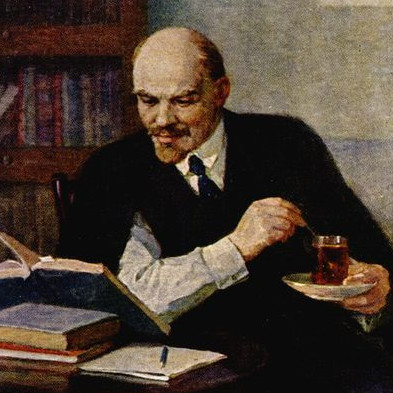
    At the same time, there are a lot of books that I know I’m not gonna read again, like crime thrillers and such. A lot of fiction in general is entertaining when you read it but doesn’t necessarily hold the same long term value imo. There are many non-fiction books that I come back to time and time again, this is rarely true for the works of fiction I do keep. Purely subjective of course, but lets just say there is more Lenin than Tom Clancy in my bookshelves.


  • Effect is worse in junior high than high school, suggesting uninformed (over)use makes things worse;

    I was always under the impression that the cognitive outsourcing is worse the earlier it starts. I am in academia, and a lot of really bright researchers, professors etc are using generative AI tools, but they have spent a good 20-30 years already reading, researching and producing high-quality output already, they are not using it to get away from thinking about hard problems, simply to speed up the process of tackling them.

    It is way worse for students. I can only speak for mathematics, but the field is trying to come to gripes with what this whole ordeal will mean, and even then we are at least quite shielded from some of the problems with education (quite easy to expand and assess in-person exams, for instance).

    You generally NEED a minimum of 10-20k hours working and thinking about this stuff to understand it at a high level, there are no shortcuts. Now the barrier to be able to put some slop together and pretend you’ve come up with a result is a lot lower, which is the shortcut many students are going for sadly.

    If anyone is interested in the discussion I’ll just put some good starters:

    https://nitter.net/aaswaminathan01/status/2025418710198960388

    https://davidbessis.substack.com/p/the-fall-of-the-theorem-economy

  • As someone who have spent quite some time in the upper echelons of society I can confidently say MOST are very high on liberalism, i.e. ignorant, uninformed, idealist. It is not that they think there is another point or are scheming for some kind of endgame (yea obv, the Palantir CEO might be, but if we are talking everyday elites), it is simply VERY easy to go through your whole life as a liberal if you never are exposed to the contradictions and contrasts of global capitalism (and when you do get exposed, it is nicely wrapped by your media)

    If you are born with relative privilege and work hard, make good money, etc and just go about with your life, it is very easy to just…not think about these things. And whenever you might stray away and think a bit more deeply you have a plethora of “political analyists” or other media telling you how you should think about it to feel good about yourself (and superior to many others).

    These are the kind of people we need to reach, educate and get on our side. And since October 2023 a less “lib-rotted” conscious has started to form in this group, even if it is tiny, tiny, tiny.


  • imo the ukraine stuff in and of itself is a hallmark of subordination to the us

    You miss one important thing: the existance of unlimited European racism. Even IF Russia had looked like the better alternative over the US (it didn’t) once normalization started in the late 90s/early 2000s, I still don’t think the Europeans would cooperate to mutual benefit – we truly are that racist. Which makes it even more frustrating given that

    it would be in the eu’s best interest to forge ties with russia

    is true.

    Subordination to the US is defo one thing, but never ever underestimate how western European racism shapes our material conditions.


  • I thought it looked really weird the first time, and I see it now when re-reading.

    Extremely unserious thing to “write”.

    I mean not to discredit Kenyan maoists who I know little about, but who the hell refers to them as a “major communist party” in the Global South as some kind of puritan gotcha. And I am not even gonna mention the Norwegian trots or w/e…

    I feel a bit silly taking the time to answer now. For shame! (…lmao)


  • and that CFgaussian here is apparently more willing to take the party line of petty bourgeois Anglo-Amerikan COVID conspiracy theorists and friends of Jeffrey Epstein than a major communist party in the Global South. CFgaussian really seems like the type of person who gets off on “knowing things other people don’t” regardless of if those facts are actually true — a real “fart smeller” who does not care for any sort of historical rigor. For shame!

    Points and disagreements can and should be made without petty personal attacks like this. They add nothing and make a serious discussion less serious.

    Prominent leftists who deny the Bosnian genocide appear to largely come from Seppoland/USA and the UK, including Noam Chomsky, known friend of Jeffrey Epstein.

    Just because American “leftists” spend a lot of time in the (english speaking) spotlight does not make them “prominent leftists” apart from in the eyes of many western liberals. So called “prominent” American leftists are generally prominent in the US only, which should tell you something. This is especially true for the zionist Chomsky who I’ve never heard described as a leftist except outside of ML circles.

    Regardless, someone being morally bankrupt (e.g. affiliated with Epstein) does not immediately disqualify their analysis or the conclusions thereof. Morally bankrupt people can provide really good analysis, just as those with acceptable morals can do the opposite – it is actually quite irrelevant to the point, which is why I think the opening paragraph is silly. (In the case of Chomsky, his analysis is usually quite bad, and at best partly good)

    As should be known by now, “genocide” as a term is historically contested in numerous ways. Importantly, in modern political discourse, it has a idealistic binarizing effect. The label is often weaponized by imperialist powers to establish an uncritical “good vs. evil” narrative, effectively short-circuiting any critical investigation into the geopolitical complexities of a conflict. It raises the social cost of analyzing the situation objectively, labeling anyone who deviates from the NATO line as an “apologist.”

    We have to recognize that the term itself, and its legal framework, is highly politicized and somewhat arbitrary. The UN definition was a post-WW2 political compromise that, for example, deliberately excluded the targeting of political groups. International law is not an objective, neutral truth handed down from above, but something shaped by bourgeois hegemony. When the West loudly invokes the “genocide” label, it is in many cases to manufacture consent for intervention—in this case, the dismantling of Yugoslavia and the expansion of NATO—not out of a genuine humanitarian concern. It is often more important to answer what happened and how it was shaped by class-dynamics, rather than whether it can be binarized as “genocide or no genocide”. Most western states contest that the Israeli oppression & extermination of Palestinians is genocide, for various reasons. Here the term is used in the opposite way – to sway the discussion away from the important questions: what is happening in Palestine and how are western states perpetrating it, to a discussion about legality, pseudo-definitions, vague arguments about “intent”, etc. It holds little material benefit for the Palestinians if the Israeli oppression is (correctly) categorized as a genocide or not, compared to actually destroying the zionist state.

    Furthermore, appealing to the authority of specific (maoist) communist publications simply because they are from the Global South (or Norway lol) does not automatically make their historical analysis correct. Some of the publications you cited take dogmatic or liberal-aligned stances on modern multipolar conflicts (such as characterizing Russia as an imperialist power on par with the US). A group’s geographic location or self-proclaimed title does not replace the need for rigorous dialectical materialism. I don’t think many would contest my view that neither Norwegian or Kenyan maoists have a large influence (or any at all) in global south leftists circles. Invoking them as some kind of non-western gotcha does not instill confidence that you are in tune with any part of actual non-western leftist discourse.

    None of this is to say that atrocities, ethnic cleansing, or war crimes did not occur. The collapse of Yugoslavia was a tragedy driven by reactionary bourgeois nationalism on all sides, exacerbated by IMF debt traps and Western meddling. But refusing to unspool the NATO narrative, and instead resorting to ad hominem attacks and guilt by association, is a not materialist analysis. We have to be able to critique the weaponization of the “genocide” narrative without falling into bourgeois moralism.


  • Yea, it is just frustrating. I really threw myself out there during the entry-into-NATO phase, and there was just…nothing; no public discourse, no pushback from “leftists” to liberals alike, everyone just agreed that it was somehow a good thing and that you were stupid if you were against it. They didn’t even need to do a referendum because the political class united so quickly and attenuated every contrary opinion – none of the politically adjacent organizations I was/am involved in wanted to talk about it. It somewhat broke me to be honest.

    Now, I am generally optimistic that globally the marxist position will continue to be strengthened and prevail, but I don’t think we will see changes in this

    opportunities for the left to provide an alternative vision and narrative if it can manage to finally set aside its Western chauvinism, embrace real anti-imperialism and internationalism, and stop falling for the liberal-imperialist “anti-authoritarian” psyop.

    in Europe for a long time. We have generational brain rot, and I am starting to think that wont change until a few generations just die off (either by age or heatwaves). This is not that I think people can’t change and more that I haven’t seen populations capable of this unless there’s a popular revolution, and I don’t think that will ever happen in Europe (at least not in a way similar to previous ones).

    That doesn’t mean I disagree with trying though, and I’ll keep doing that. I’m just venting here because IRL I am the one who takes the vehemently optimistic position, so as to not discourage the baby leftists around me.

    decaying material conditions will sharpen the contradictions between the chauvinistic outlook and the lived reality to a point where some kind of reckoning must happen.

    My skepticism here is that for Europe this usually means Fascism and we see no signs of it being different this time – on the contrary – I think socially the case for socialism is much weaker than it was in Germany, Italy, Spain, etc during the 1900s. At least the labor movement was organized, we had a strong Soviet Union and people were not so entrenched into the narratives of the capital class. The political class itself was much more fragmented than today and if we couldn’t succeed with a socialisation of our institutions during those conditions, I am relatively restrictive in holding out hope for it happening under our current conditions, which I feel are much worse.

    The coming decade of post-Ukraine policy will dictate a lot of what happens. As the material conditions continue to degrade, it almost feels like the most optimistic scenario is implosion and a further weakening of european standing in the world, increasingly forcing us to make amends and respect Africa and Asia. As long as we have a strong Russia, China, Iran, Sahel states, etc, there is at least hope that the EU by necessity is forced to acknowledge multipolarity – which in the long run will birth a new political consciousness that isn’t as chauvinist as the current one.


  • *(By the way, they also briefly address Sweden and its racism toward the end of that linked video discussion, you can check it out if you’re interested.)

    Yea the point was spot on. And I don’t even know how this course should be reversed, one of the most pressing issues is that is the same (class of) people still running the countries (in both Germany and Sweden). Denazification in West Germany was a joke, and in Sweden there never was anything of the sort – which just leads to unconditional chauvinism. You start to understand why Lenin just shot people, and why the cultural revolution was necessary.

    Ah, I am so done with all of it.


  • But when it comes to general racism my experience has been that Scandinavian countries are actually the worst and where it’s most insidious, precisely because they pretend to be all progressive but in really they have a massive superiority complex.

    Sigh, I’d say that you’re generally right sadly. It is hard to argue against it when around 20% of people vote for a party that is a whitewashed literal Nazi party (and the current leader joined when it was branded as such).

    massive superiority complex.

    Yes, and I’d also claim that we are among the most propagandized people on the planet. I have a hard time actually thinking of a people more propagandized, possibly the Germans – but I feel like even for them there’ll always be a tiny tiny hint of doubt since they actually DID do the Holocaust once. For swedes there is zero guilt, zero introspection and total belief that your outlook on the world is correct.

    The population is also just…ignorant. Our current prime minister literally wrote a book about his ideology a couple years ago where he equaled the Swedish wellfare state to apartheid and stated his life’s purpose to be the destroying of it – but people still vote for this guy and then are chocked when he does just that. Don’t worry, 44% of adults have a university degree, surely this means they can read one book.

    I could write a lot about my people but it’ll probably amount to a book (and I fear it’ll be even harder to make them read two books).


  • Ah that was a little missleading, I just put K-visa there because it has been making quite the buzz and people have said it is great, I know one person who got one and she is doing a postdoc. I have only heard of academics getting it after already having secured an offer. Those who just went there to study languages went with “ordinary” visa whichever that is, and they did so pre-covid when I think it was a bit easier.

    once again, very difficult to get transferred and there’s minimal foreigners in Chinese engineering business.

    Yea it is probably very industry dependent sadly, the two people I know who went this route worked in marketing/sales and studied Mandarin like crazy – once they got proficient enough they were very valuable working with import/export sales with foreign and Chinese companies in their niche fields (this was during right at the end of Covid and they have lived there since). I think it’s much harder for engineering graduates at the moment sadly, it might change in the coming years but I wouldn’t count on it.

    Regardless of what the future might hold, I would really try and get there some way – whether by exchange semester or just on vacation – to get a feeling for the country.


  • If you are truly serious about this there are a few more or less straight forward ways to do it. Generally, all these paths are easier if you study well for your bachelor and try to get into a masters/PhD program at a well-known university (does not have to be Ivy-league at all, but the more prestigious the better).

    Then after or during your graduate studies:

    • Land an internships/job at Chinese firms with offices in the US, build some experience --> ask to get transferred to China.
    • [If PhD] Land a postdoc at a Chinese university

    Or the yolo option (which TWO of my friends did)

    • Get a K-visa and just go there and apply for jobs, sign up for some language courses at a local university. (maybe even fall in love and marry)

    Regardless of how you get there, knowing Mandarin is like 99% required eventually, so might as well start learning as soon as possible. I have a few non-chinese friends who have moved to or lived in China for some time and all of them got there one of these ways.


  • You should not make stock investments with money you can’t afford to lose. You need to read up on private economics and yourself decide what your preferred risk-profile is, but all investments come with a risk. If you currently dont have a lot of money and no stable income, I would strongly advice you to not put money into the stock market. The shorter the time-span the higher the “risk” (= the more gambling it is), which is why you should first get your esssentials in order: a roof over your head and a sustainable income. Stock market gains are never sustainable income due to the inherent risk of the investments and the amount of capital required to sustain a lifestyle by the passive yields.

    Once the essentials are in order then you can start working on your risk-profile and potentially look to invest whatever leftover money is there at the end of the month to protect it from inflation.

    The first step is thus to always try to identify where you can find work, upskill, try to use public resources like libraries or public education institutions which sometimes run programs for skilled employment - and only after start thinking about investments and the like.

    Investing in the stockmarket is to be viewed as a way to potentially grow a portion of your leftover money that you can afford to lose, not as a way to get that money in the first place.