

Marxist-Leninist ☭

French 🇫🇷

he/him

Study maths 🧮

my Akkoma account

My mastodon account

my Peertube account

  • 24 Posts
  • 141 Comments
Joined 3 years ago
cake
Cake day: June 10th, 2023

help-circle
  • ExotiqueMatter@lemmygrad.mltoMemes@lemmygrad.mlEurope
    link
    fedilink
    arrow-up
    22
    ·
    edit-2
    2 days ago

    More like Europe made Russia a problem for themselves for no reason. Russia would have happily been friend with NATO and the EU if only they’d stop being frothing at the mouth bloodthirstily red in the face mad about the fact Russia didn’t let them make it a cheap labor vassal like they did to the rest of the former eastern block after the USSR collapsed.


  • The thing about mastodon is that it doesn’t have an algorithm to put recommended posts into your feed like the “normal” micro-blogging social medias you might be used to. By default, the feed shows only posts from accounts you are subscribed to in chronological order, so if you aren’t subscribed to anything, it won’t show you anything. You need to build your feed yourself by going out of your way to find accounts you want to see posts from.






  • Part 2 of 2.

    The human population is nothing unusual; it’s between 8 billion and 11 billion.

    Hugely increased population density, and most of the world left to wild nature.

    90% live in dense cities. The general historical trend of urbanisation justifies this.

    City population density = 25,000/km² (Comparable to Manhattan’s 28,873.0/km²)

    • 9 billion city-boys at that density = 360,000km² = the size of Germany is built up (spread around the world)
    • 1 billion rurals @ 130 per km² = 7.7 million km² = the size of Australia lives is rural human habitation (spread around the world)
    • Everything minus a Germany and an Australia is a nature preserve!

    The cities are 90% park, 10% tall buildings averaging 24 floors in height. That gives the city a floor-to-area ratio of 2.4 to 1. It means each person has 96m² of floor space. Rather than being just vertical towers, they also have a lot of spaghetti-like tunnels and horizontal corridors in the sky.

    This is certainly a way to preserve nature, but let me tell you about an other way that I like a lot more.

    To start off, here’s what Friedrich Engels has to say on a similar subject in his pamphlet Principles of Communism:

    In his bullet point list of measures to be gradually adopted after a socialist revolution, Engels list this one:

    Building on public land of communal residences that combine the advantages of both urban and rural life without the drawbacks of either

    And later he adds these quotes:

    The existence of classes originated in the division of labor, and the division of labor, as it has been known up to the present, will completely disappear. For mechanical and chemical processes are not enough to bring industrial and agricultural production up to the level we have described; the capacities of the men who make use of these processes must undergo a corresponding development. […] Industry controlled by society as a whole, and operated according to a plan, presupposes well-rounded human beings, their faculties developed in balanced fashion, able to see the system of production in its entirety.

    A corollary of this is that the difference between city and country is destined to disappear. The management of agriculture and industry by the same people rather than by two different classes of people is, if only for purely material reasons, a necessary condition of communist association. The dispersal of the agricultural population on the land, alongside the crowding of the industrial population into the great cities, is a condition which corresponds to an undeveloped state of both agriculture and industry and can already be felt as an obstacle to further development.

    In other words, in a developed communist society rural and urban will stop being two opposite and incompatible things. They will both be managed by the same peoples with a unified purpose.

    From this follows a very interesting way to preserve nature:

    Without capitalism, town stops being opposed to countryside and civilization stops being opposed to nature. So instead of retreating to our tiny corner, another way for a communist society to preserve nature is to lean into it, let our cities become part of nature and let nature become part of our cities.

    Our cities don’t have to be a forbidden zone for most plants and animals like most of them are today. They can, from the streets to the buildings themselves, include large green spaces with animals.

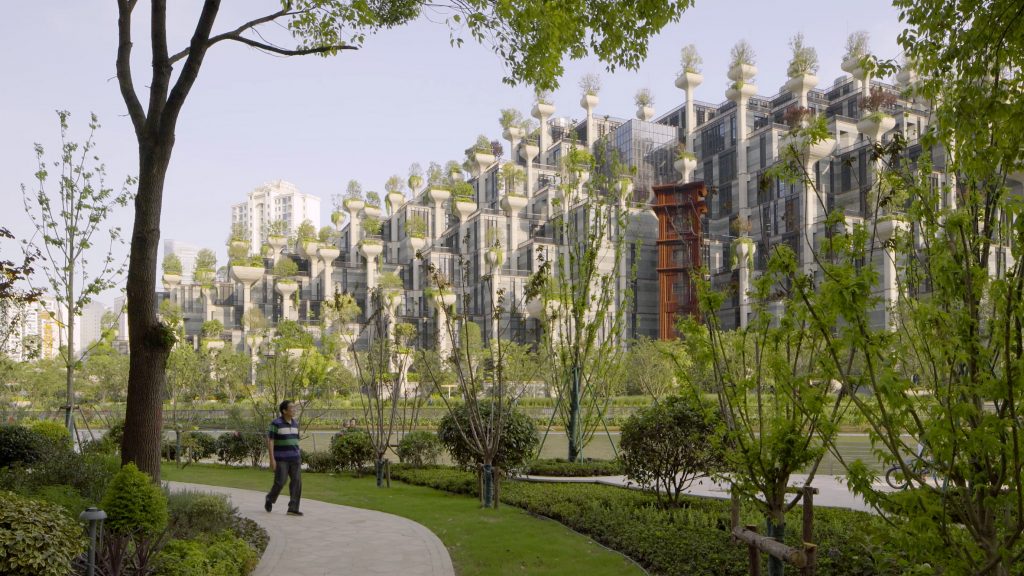
    We kinda see an early taste of what this could look like in Chinese cities:

    Nanning city:

    1000 trees mall in Shanghai:

    Of course these are just anecdotal examples, a lot of work is to be done.

    It’s an individualistic culture. The base (in the Marxist sense) doesn’t make you depend on other people. It promotes indulging your whims. If you want to flex your inner Calvinist, you can work hard at self-improvement. A lot of people devote their lives to practicing Buddhism.

    I don’t think a fully collectivized society with democratically owned and operated means of productions has very high chance of developing an individualist culture, even if humans don’t have to work.

    Our empathy drives us to care about others even if we don’t know them and to approve of peoples who do so for others and disapprove of peoples who only look out for themselves. Just look at how positively we see peoples who sacrifice themselves for other’s sake.

    Today’s ultra-individualist tendencies are largely a consequence of capitalism’s tendency to pit everyone in competition against everyone.

    A communist society simply doesn’t have these incentives. A collective economic base can’t support or strengthen an individualist superstructure.

    Does the luxury make you lazy and despondent? Maybe, but a counterpoint is that you’re biologically hearty, have a strong constitution.

    I don’t think it would necessarily, actually. It really depend on how resources are distributed on practice, how the society’s culture views the consumption of these resources and how peoples are educated about consumption and its risks.

    I think that’s all the points I wanted to raise. I may edit if I think of something I want to add.


  • I’m gonna try to give constructive criticism of a few points. Part 1 of 2 because I managed to go pass the character limit apparently.

    Brave New World illustrates how a world where abundance, pleasure, and luxury make life meaningless and hollow. Same here. But there’s a lot of perks too. Like Huxley, I’m leaning into the alienation. My tech-stack is very different; Brave New World has low-caste workers doing menial work whereas this world has inanimate machines.

    I hard disagree with the theses that abundance and not having to struggle to have a good life makes life meaningless and hollow. It’s just cope to relativize our suffering under a society in which a few have so much they don’t know what to do with it all and everyone else has to fight to survive like: “Our life under capitalism may be an endless struggle just to live an other day but at least the fact we need to be quasi slaves to corporate overlords for most of the day just to not starve gives us meaning copium”.

    The reason the few peoples who are living in abundance right now have hollow meaningless lives filled with buying stupid useless shit that are made with no other purpose than to be as expensive as possible like super-yacht and gold iphones encrusted with diamonds is because their bourgeois condition makes them unable to interact normally with their fellow humans and confine them to their small clubs only attended by other rich assholes like them and all that the endless accumulation of money most of them devoted their entire life and education to has done for them is leave them with too much money to ever be able to spend even a fraction of it on anything they can honestly truly want or need.

    So to cope with how isolated they are and how purposeless what they spend their entire life doing is they need to convince themselves that it’s all worth it, that all this money they have, no matter how useless it is, makes them so much better than the average human, and to convince themselves of that they spend money on “luxury” things they convince themselves they want or need but don’t really.

    This is the opposite of the solarpunk world (1, 2, 3, 4, 5) in two ways –

    • The solarpunk world was heavy on decentralised unalienated labour. Things there were made by hand, and production has a lot of positive externalities like community-building and Right Livelihood. Here all the work is automated and humans are useless but materially wealthy.

    • The solarpunk world was frugal on energy. A watt saved is a watt earned. This world is the opposite: create energy abundance and just let 'er rip. There’s a theory that development happens by maximising energy throughput and not worrying much about efficiency. However, I will make some mentions of energy efficiency coz I couldn’t help myself.

    Humans being “useless” isn’t necessarily a bad thing depending on the type of story you’re trying to tell. But I think it’s something a communist society should never do even if they can.

    Automating menial tasks that no one like but someone has to do, like collecting the trash, janitorial work, etc, makes sense. But fully automating the fun stuff like art, engineering and science isn’t worth the increase in efficiency.

    I like the second bullet point though.

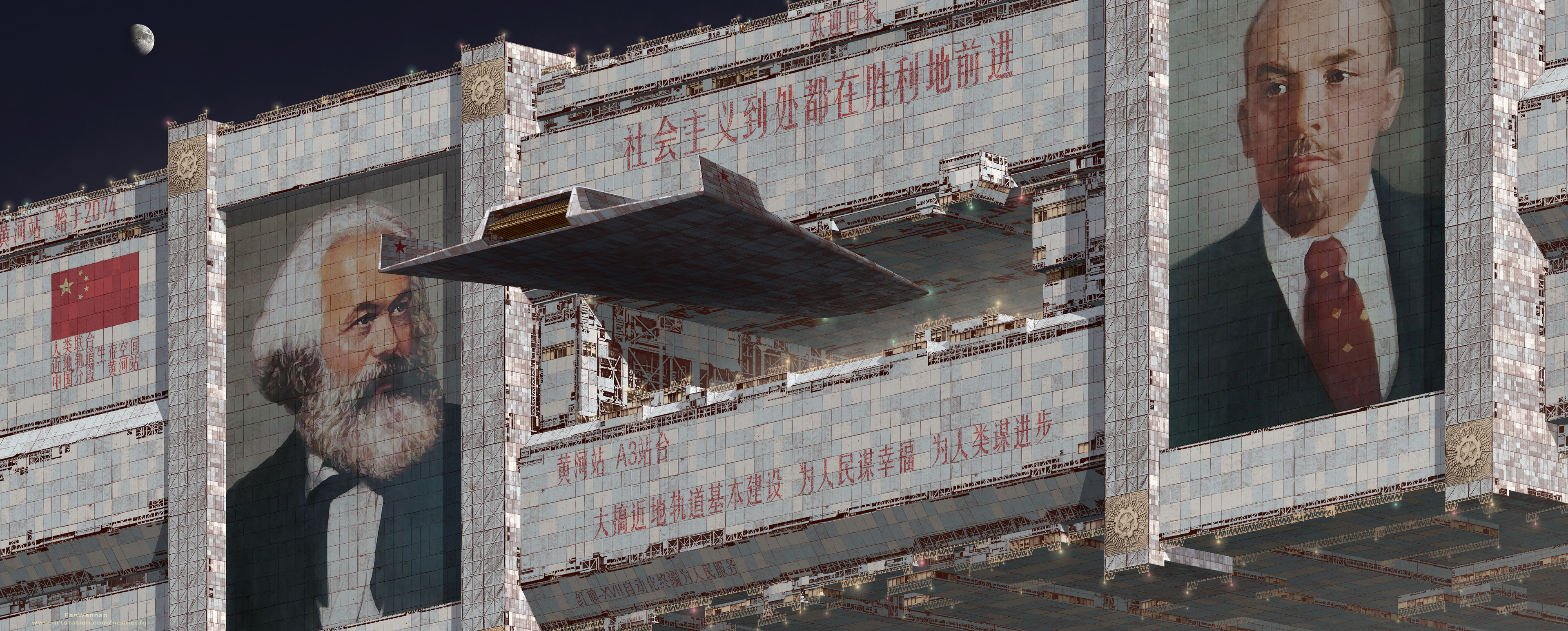
    There are superhuman AIs called the AMIs (advanced machine intelligences). These run a fully-automated luxury communist economy for humans on 15% of the globe (mostly in dense megacities). The rest is a wildlife preserve.

    The AMIs (advanced machine intelligences) have designed a fully-automated means-of-production. Humans don’t have to work, either physical or mental work.

    Cities are built by huge and small robots, giant 3-D printers, biomimetic self-assembly. Architecture by generative A.I.

    Want some new clothes? Order it on your personal computer (described below) and it shows up at your door. Fashion design by generative A.I. You could even input a bunch of outfits you like and the generative A.I. would give you more of the same.

    Hungry? Your auto-kitchen can cook for you at home, you can order delivery (from automated kitchens) or the cities are packed with restaurants and buffets. Culinary arts by generative A.I. The world feels a lot like a fancy hotel or resort.

    Want a new gadget, toy, or product? Just order it on your computer. The software that runs the economy fulfills most requests. A request for a personal flying car or a mega-robot will likely be denied. No money changes hands; the request is either accepted or denied. (This suggests a plotline: what if one human finds her requests for 100-tonne megarobots, personal airships etc. are all fulfilled? Why her? The reasons of the AMIs are inscrutable.)

    Want a tropical beach holiday? Those are a bit scarce; not even the AMIs can put 100s of millions of people on the Bahamas at the same time. But request it. You are free to request an apartment on the other side of the world, and things will be shuffled around if possible. Or you can request two weeks in a holiday resort –

    Even the Nature Preserves aren’t off-limits. You can camp there with permission. Enter without permission and the AMIs will throw you out.

    I can get behind behind AIs automating economic planing based on human demand, industrial input and industrial output, especially since there exists relatively simple algorithms to plan an economy that we are already able to run on modern computers.

    I’d still say that humans should ultimately still be the ones guiding the direction that the economy and society are going in, but then again it depends on the kind of story you want to tell.

    I could’ve gone the alternative route of drexlerian nano assemblers where everything is made with decentralized desktop fabs, but I chose not to. It would probably have been more realistic, because a civilisation with enough technological sophistication will understand how to manipulate atoms. This would make factories obsolete: production would be very decentralised.

    I don’t think this would make factories obsolete, at least for “if it aint broken don’t fix it” reasons if nothing else.

    Sure, for fancy sci-fi ultra precise tech, this is better that current manufacturing method no doubt. But if you’re building mugs, closing all the mugs factories and replacing them with nanotechnology that assemble things with molecular precision might be a tiny bit overkill don’t you think?

    Really pushing nano gets into weird territory and I wanted a more understandable world. “One of the most remarkable figures calculated in Nanosystems is the power-to-weight ratio of the electric motor described in section 11.7. For comparison, a typical automobile engine might produce 100kW power. Drexler motors producing the same power would occupy a volume of a tenth of a cubic millimeter, about the same as a single hair from one of my eyebrows.” – A world where something barely visible can produce enough mechanical force to punch a hole right through me is weird to think about and scares me as an animal. Utility fog is weird to think about and changes everything.

    I don’t think it would necessarily makes the world less understandable, you just have to make sure to explain it to the reader. I like this utility fog concept, so much stuff that can be done with it. It has potential for unusual types of sci-fi weapons and vehicles.


  • Denialism as the word indicate is denying that atrocities happened and/or who committed them, but knowing that atrocities happened and who did it require evidences. So when an anti-communist is accusing us of denialism for pointing out that there is no evidence that communist committed a certain atrocity, what they are saying in essence is that the claim of communists committing the atrocity should be considered ontological true independently of any evidence and are accusing us of denying that ontological truth by refusing to accepting their position that it doesn’t require evidences.

    You see this a lot with liberals even outside of that particular subject. Whenever you criticize “too harshly” a politician they like or a narrative important to their worldview, they often respond with “gotchas” that translate too “my theses is obviously the true one and doesn’t need proof and you are an idiot for thinking otherwise”. For example, during the last election whenever all of their arguments were variations of “the Democrats arr the lesser evil” and didn’t bother explaining how or why because to them “the Democrats are less bad than the Republicans” is an obvious truth that doesn’t need to be proven.

    Let’s make a comparison between our supposed denialism and actual denialism: The holocaust vs the “holodomor”.

    What makes denying the Holocaust denialism? Proofs! We have humongous amounts of evidences that the Holocaust happened: we know why it happened from all the writings in which Hitler and his underlings explained in detail what they wanted to do and why they wanted to do it, about the lebensraum, the so called “aryan race”, the anti-Semitic conspiracy theories propagated by the Nazis, we know that it happened and how it happened from all the administrative documents tracking the deportations, who was in which train in destination to which camp from where, from the camps and gaz chambers themselves that were thoroughly investigated by the allies after their capture, from the mass graves, belongings and remains found in large quantities, the case is so full bursting with evidences you have to be either a liar or a special kind of ignorant to think it didn’t happen and/or wasn’t on purpose.

    On the other hand, in the case of the claim that the Soviets caused the famine on purpose to kill Ukrainians we have nothing of the sort, not even a little bit. We have no internal documents showing that the soviets purposefully withheld grain from Ukraine or explaining why they would even want to do that in the first place, no evidence that the soviet government and anything against the Ukrainians in particular, nothing. Worse! We have evidence that contradict this narrative, administrative documents from the time show that as soon as the soviet government found out about the famine they not only stopped exporting grain out of Ukraine they even started importing grain to Ukraine. On top of that there are inconsistencies in the narrative, most of all in my opinion: the fact that it focuses only on the Ukrainians even though other ethnicity of the USSR were affected by the famine, some even more than the Ukrainians like the Kazakhs. Why is the narrative Ukrainian centric? Because the Holodomor narrative was crafted by the Nazis as a way to justify war against them, and the Nazis being the racists that they are didn’t wanted the “heros” of their narrative to be central asians so they took the most “aryan” of the Slavs (according to them), the Ukrainians. Because that’s the true nature of the Holodomor, it’s a Nazi narrative to demonize communists, and it still is. Have you ever heard or read someone say that the Soviets are worse than the Nazis because of the Holodomor? That’s the intended conclusion. The Holodomor’s purpose is to relativize Nazi horrors and demonize the USSR by making you arrive at the conclusion that the Communists are worst than the Nazis.


  • ExotiqueMatter@lemmygrad.mltoMemes@lemmy.mlLibs can't read
    link
    fedilink
    arrow-up
    6
    ·
    edit-2
    3 months ago

    Literally pretty much everything Lenin wrote about Trotsky was him calling Trotsky an idiot who has no clue what he’s talking about half the time and was generally a nuisance to their party work and organizing. In what world was Lenin better friend, or friend at all, with Trotsky than Stalin?